On this page
Introduction
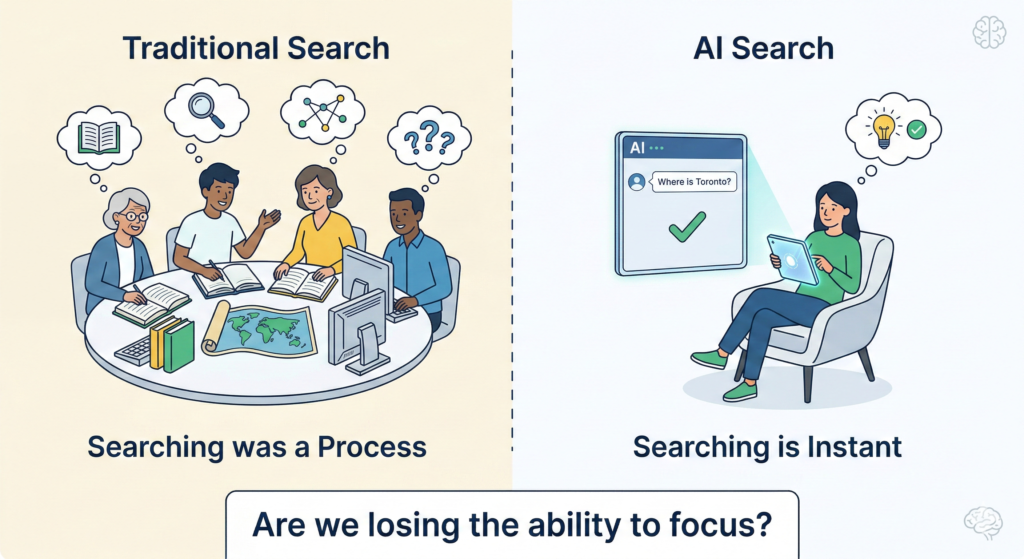
Before AI (Artificial Intelligence) became part of daily life, searching for information felt different.
We used Google, we opened multiple websites. we read different opinions.
And then, we compared ideas.
Finding an answer was not instant.
Instead, it was a process.
Because of that process itself helped us to think.
Today, things have changed.
Now we ask AI.
We get the answer.
And then we move on.
But this convenience raises an important question.
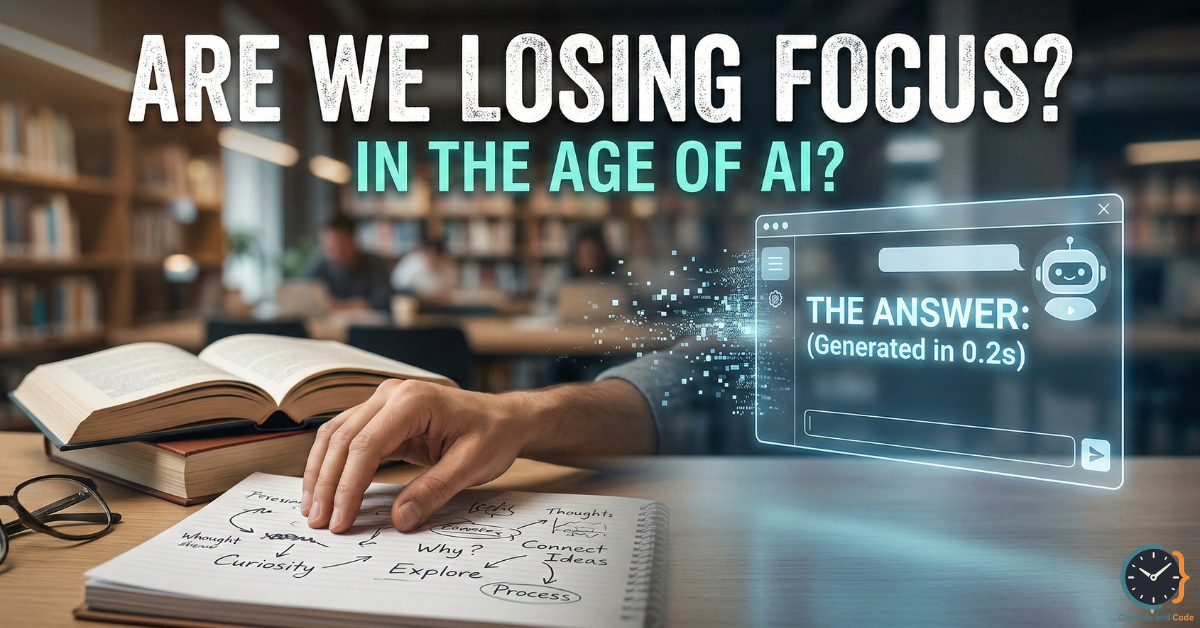
Are we slowly losing our ability to focus and think deeply?
The Research Habit We Are Losing

Earlier, when we searched for one topic, we often discovered many related ideas.
For example, one article led to another.
And one question created new curiosity.
As a result, our knowledge used to expand naturally.
Now AI gives us exactly what we ask for.
However, it gives nothing more unless we actively ask for it.
So, the journey of exploration is slowly disappearing.
We are getting answers faster, but we are learning less.
The Decline of Critical Thinking due to AI
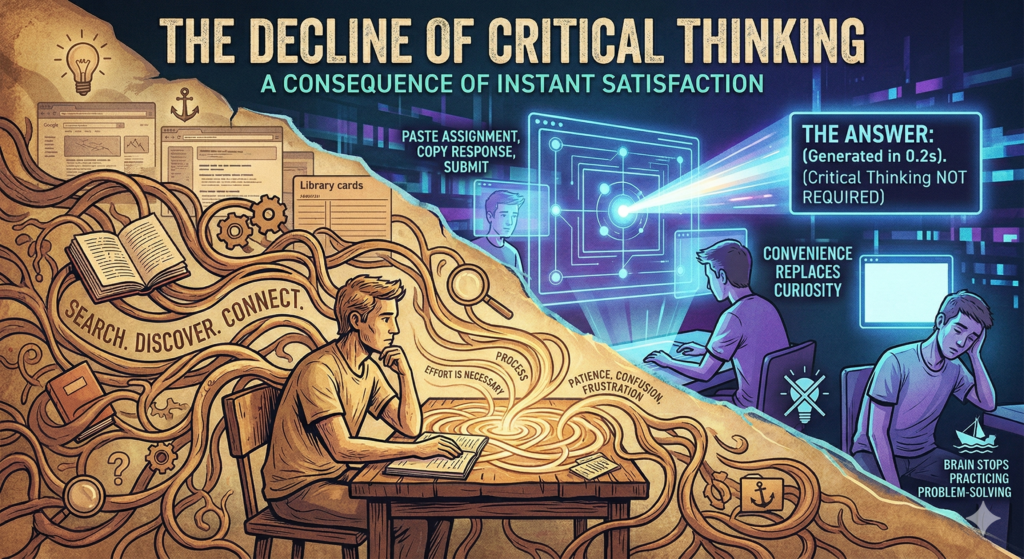
Thinking requires effort.
It requires patience, confusion, and sometimes frustration.
But today, many people prefer skipping that effort.
Instead, they want the final answer immediately.
This is especially seen mostly among students.
Assignments are pasted into AI tools.
Responses are copied.
And then submitted.
Sometimes without even reading.
Over time, when the brain stops practicing problem solving, the ability to think weakens over time.
That’s why convenience slowly replaced curiosity.
The Rise of Copy-Paste Culture
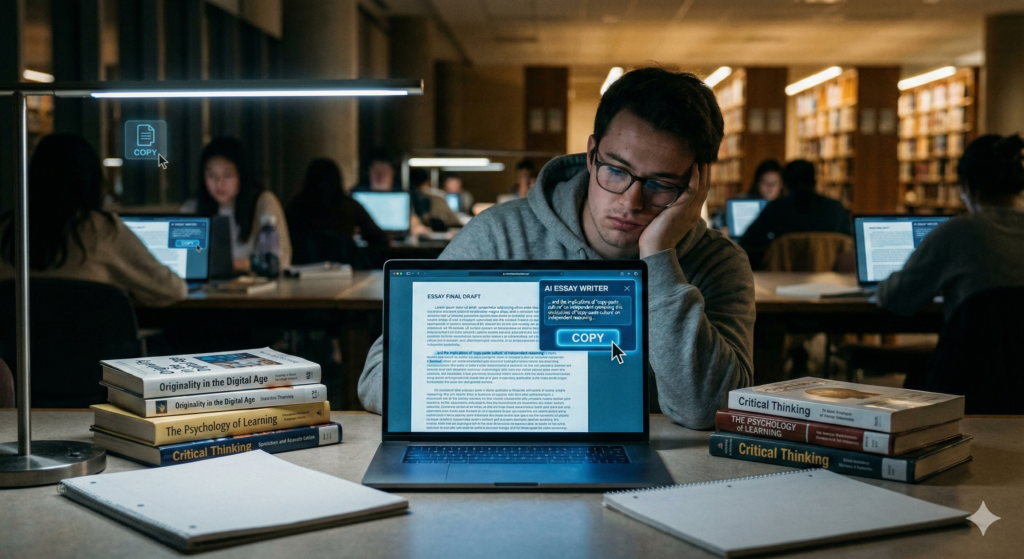
Technology has always influenced learning, but AI has accelerated a dangerous habit.
Original thinking is slowly being replaced by generated content.
Instead of creating ideas, people reproduce them.
This does not just affect academics.
It affects creativity, confidence, and independent reasoning.
In other words, true learning comes from struggle, not automation.
Quick Answers and Mental Laziness
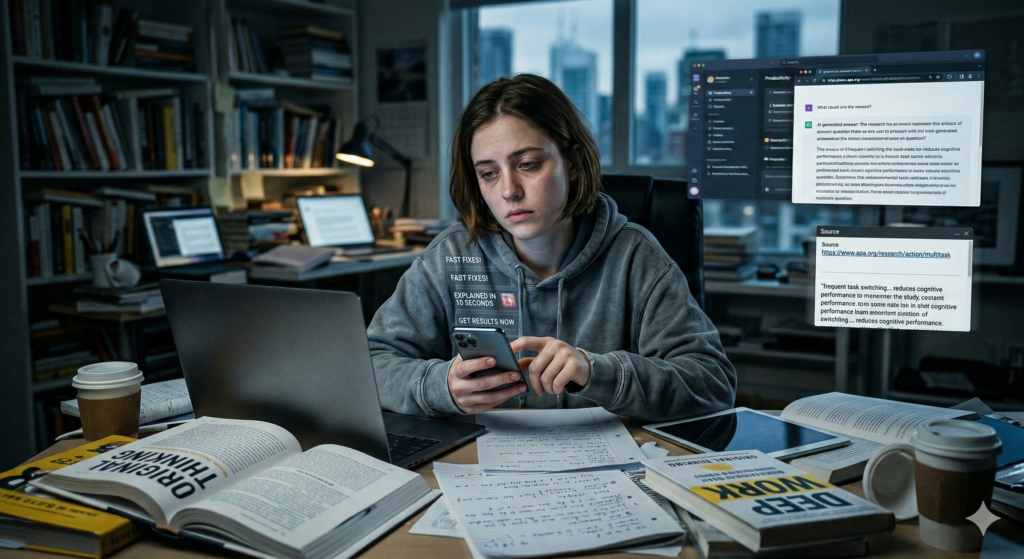
Modern technology has trained us to expect speed.
We want short explanations.
Fast solutions.
And immediate results.
Over time, this creates mental laziness.
Not because people are not capable but because effort is no longer necessary.
So the question becomes, Why think deeply when a tool can think for you?
Studies have found that frequent task switching can reduce productivity and cognitive performance because the brain needs time to refocus after interruptions.
Source: Multitasking: Switching costs
Attention Span in the Age of Instant Information
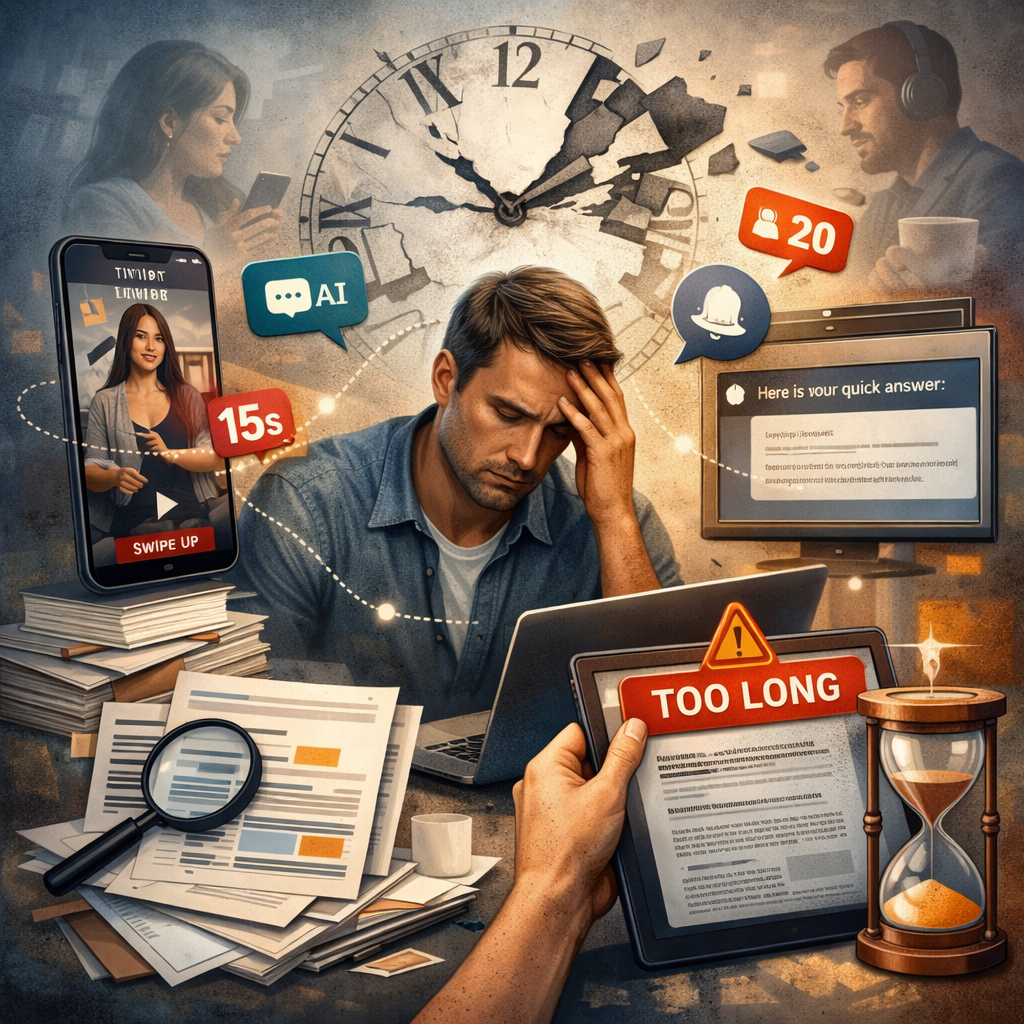
Attention span was already changing before AI.
For example, short form content like TikTok and Reels trained our brains to consume information quickly.
So, long videos became shorter.
And articles became skimmable.
Now AI pushes this even further.
We ask a question.
Then we get an answer instantly.
As a result, if something looks too long, we skip it.
So, patience is becoming rare.
You might also notice that focus itself has become harder to maintain in modern life. I explored this idea earlier in my article on multitasking and attention, where I discussed how constant switching between tasks reduces our ability to concentrate deeply.
👉 Read more by clicking here: The Myth of Multitasking: How Focus Became a Lost Skill
The Need for Instant Satisfaction

Another change is psychological.
People now want information that feels immediately satisfying.
Because if something is too complex, too long, or requires effort, it feels uncomfortable.
So we avoid it.
Over time, this creates surface level knowledge instead of deep understanding.
In other words, we know more things but understand fewer of them.
Growing Dependence on AI
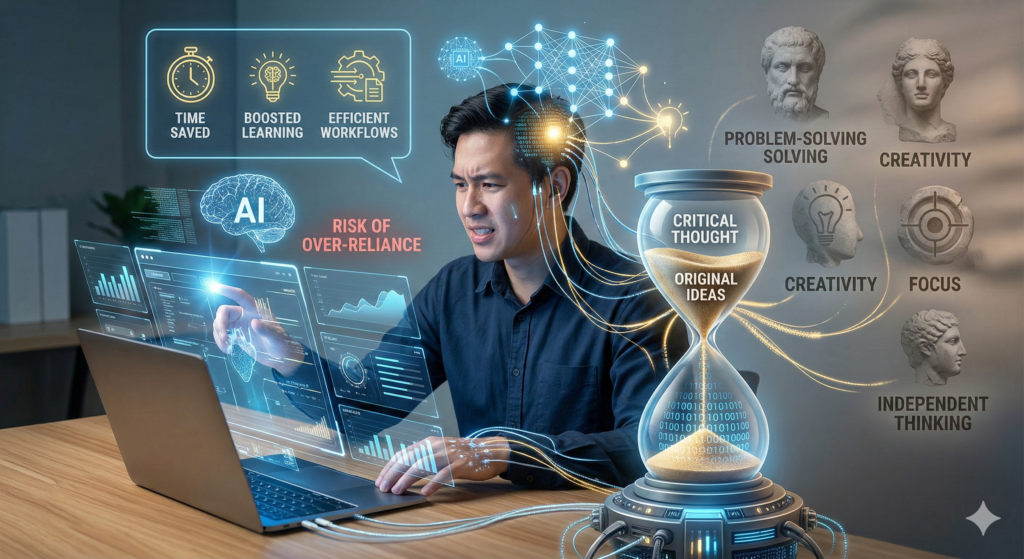
AI is powerful.
It improves productivity, saves time and helps in learning.
However, heavy dependence can be risky.
Because if people rely on AI for every decision, every idea, and every solution, important human abilities may decline.
For example, problem-solving, creativity, focus., independent thinking.
So, the danger is not AI itself.
Instead, the danger is over reliance on it.
In fact, AI is evolving very quickly. Tools are no longer just assistants, they are becoming independent agents capable of performing tasks with minimal human involvement. I discussed this transformation in detail in a previous article about the shift from AI assistants to autonomous agents.
👉 Read more by clicking here: From AI Assistants to Agents: How AI Now Acts Alone
Final Thoughts on AI
AI is not the enemy.
In fact, it is one of the most powerful tools humans have created.
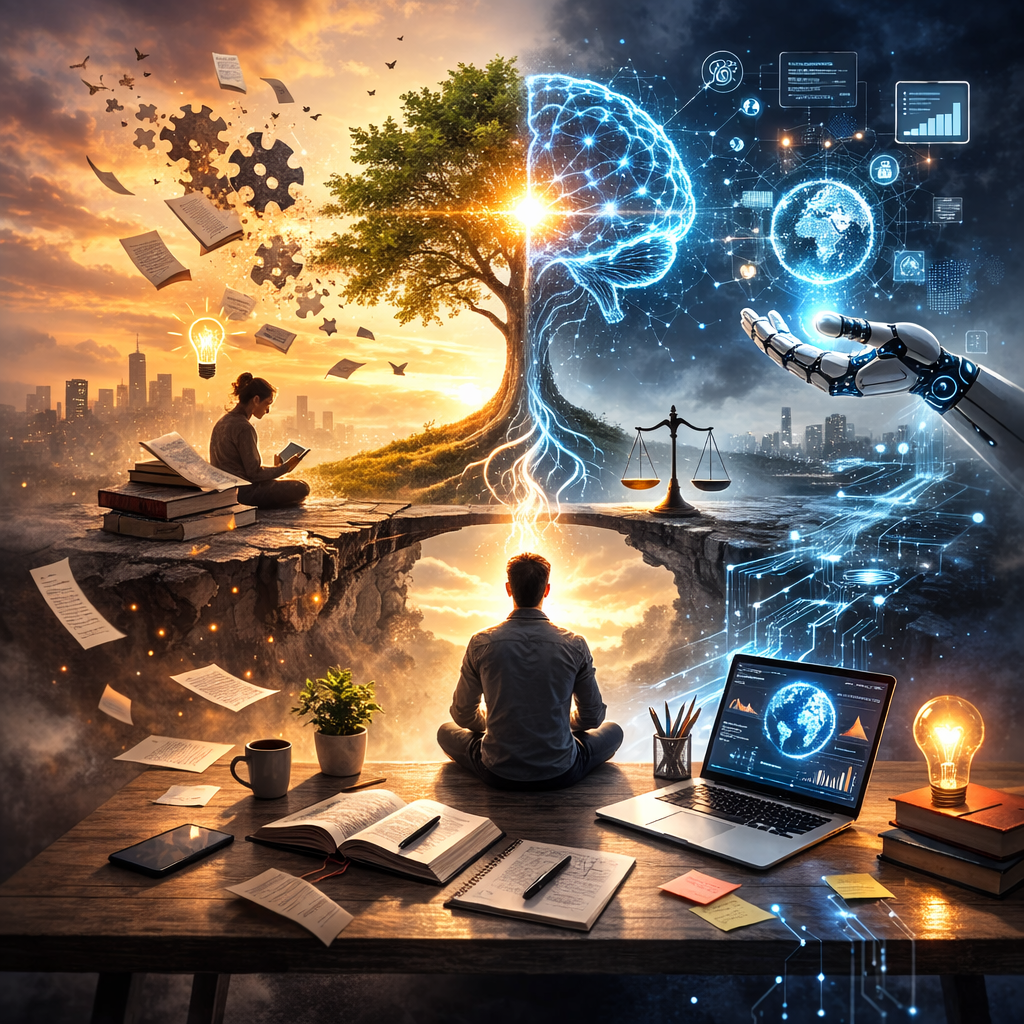
The real challenge is balance.
Using AI as an assistant can strengthen us.
Using AI as a replacement can weaken us.
So, the future will not belong to the people who use AI the most.
It will belong to those who can still think deeply while using it.
If this piece gave you something to think about, you can support my writing here ☕
Maybe become proficient on using AI in ways that can be added in your repertoire.